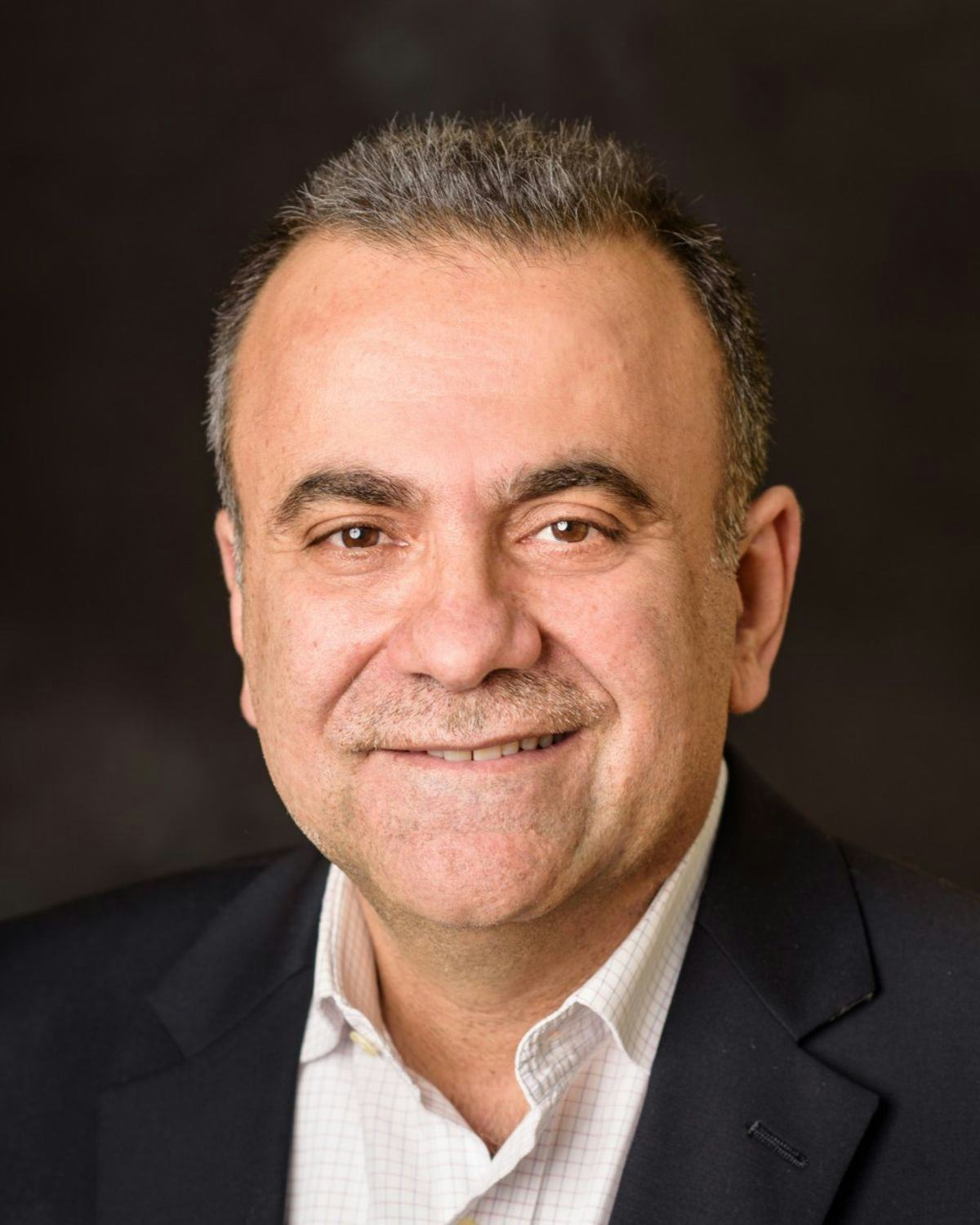
 Dr. Muhammad Hajj, Chair of the Department of Civil, Environmental, and Ocean EngineeringMessage from the Chair
Dear Friends,
Welcome to the Department of Civil, Environmental and Ocean Engineering (CEOE).
The past year reaffirmed that—even amid significant challenges and uncertainties—the Department of Civil, Environmental and Ocean Engineering (CEOE) is well positioned to advance its mission with excellence. Driven by determination, creativity, and commitment to innovation, our faculty and students continue to push boundaries and produce groundbreaking discoveries to strengthen Stevens’ position as a leader in civil, environmental, and ocean engineering.
Transforming Civil Engineering Through AI
We continued to redefine the future of construction and civil engineering through advanced applications of artificial intelligence. Our researchers are developing self-monitoring infrastructure systems capable of evaluating structural health, recommending maintenance actions, and autonomously adapting to changing conditions. These innovations are improving real-time decision-making, elevating construction-materials quality control, reducing project costs, and minimizing environmental impacts. Recognizing the profound implications of these technologies, CEOE has also prioritized integrating AI across education and industry. In April 2025, we hosted the inaugural workshop in our new Technology in Construction series. AI in Construction convened academic and industry leaders to examine how AI is poised to transform project risk identification and management.
Innovative Approaches to Forever Chemical Remediation
We advanced innovative solutions to some of today’s most pressing environmental challenges, including the removal of PFOS—a member of the PFAS family of “forever chemicals”—from water and wastewater. In a major breakthrough, a CEOE team of faculty and students found that iron powder is 26 times more effective per unit surface area than activated carbon in removing PFOS. Notably, the iron powder retained its adsorption performance even after rusting, highlighting its potential for robust and cost-effective remediation.
Advancing Coastal Resilience
We made major strides in enhancing our ability to predict, monitor, and manage coastal flooding and its impacts on both natural and built environments. Building on the Dynamic Underwater Coastal Kinematic Surveying System (DUCKS) and the operational Stevens Flood Advisory System (SFAS), we secured new funding to launch the Stevens Extreme Event Coastal Preparedness and Response System (SEECPRS)—a transformational initiative enabling rapid, high-value data collection before, during, and after extreme coastal events. Leveraging Stevens’ elevated location, we installed a state-of-the-art X-band rainfall radar that dramatically improves regional rainfall mapping. In parallel, our researchers are deploying an expanding network of flood-monitoring sensors across vulnerable coastal areas. Together, these investments form a unique, rapidly deployable, multi-platform observing system for extreme flooding.
Knowledge Exchange and Global Engagement
Our commitment to collaboration and community building remained strong throughout the year. In partnership with Sapienza University of Rome, CEOE hosted the Fourth International Nonlinear Dynamics Conference at Stevens in June 2025. The event featured keynote presentations, workshops, student competitions, and technical sessions showcasing global advances in nonlinear dynamics. Earlier in the year, CEOE also hosted the Coastal Flooding Technical Workshop, bringing together experts to discuss emerging strategies and technologies for addressing coastal-flooding challenges.
Looking Ahead
We are delighted to welcome Dr. Tao Ye to CEOE as an assistant professor. As we look to the years ahead, our vision remains clear: to advance knowledge, accelerate innovation, and develop sustainable solutions that strengthen communities and infrastructure for generations to come. With the dedication and passion of our faculty, students, staff, and partners, we are exceptionally well positioned to keep up and build on our strong momentum.
Finally, I invite you to explore the accomplishments highlighted in our 2025 Annual Report and welcome your feedback. Please stay connected with us on LinkedIn and Instagram for updates on our initiatives, and feel free to reach out to learn more about the work we do at CEOE.
Dr. Muhammad Hajj
- November 2025


